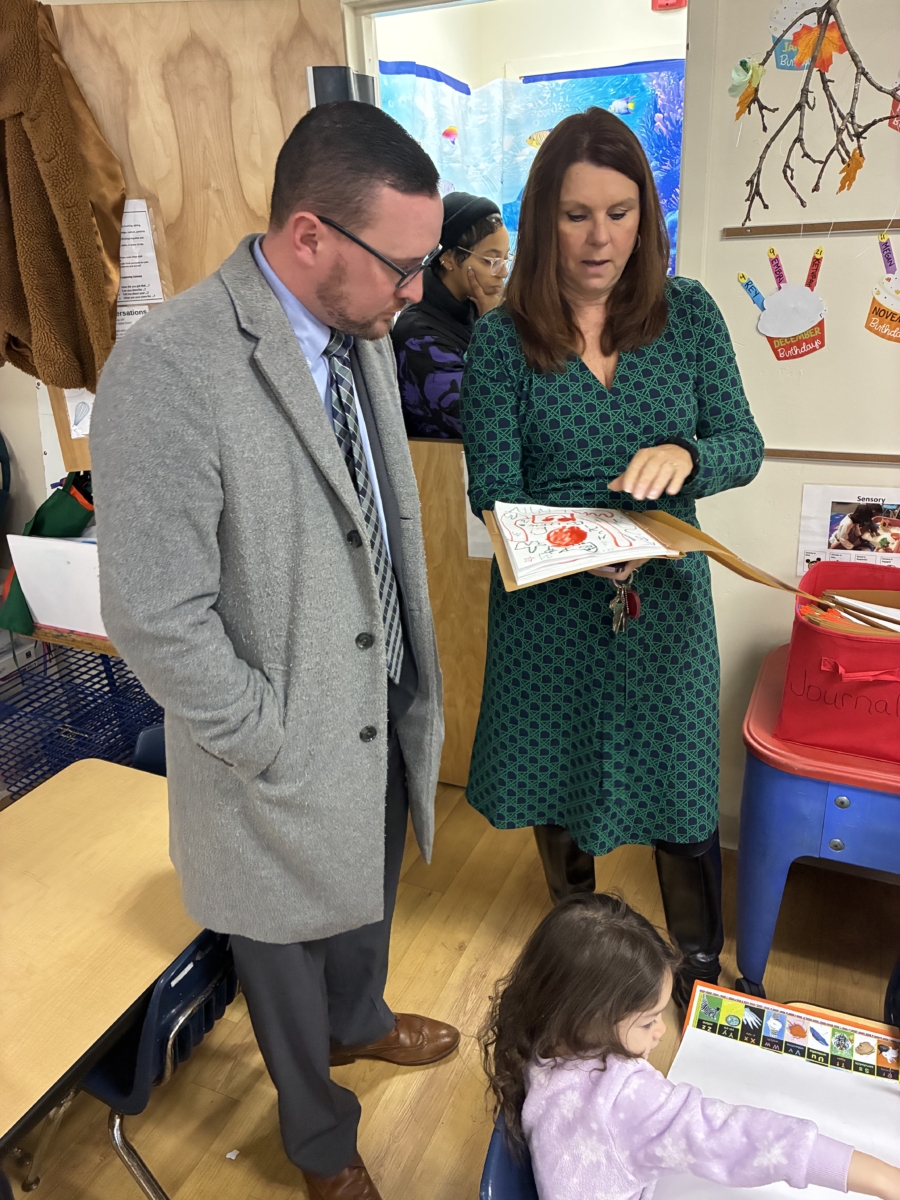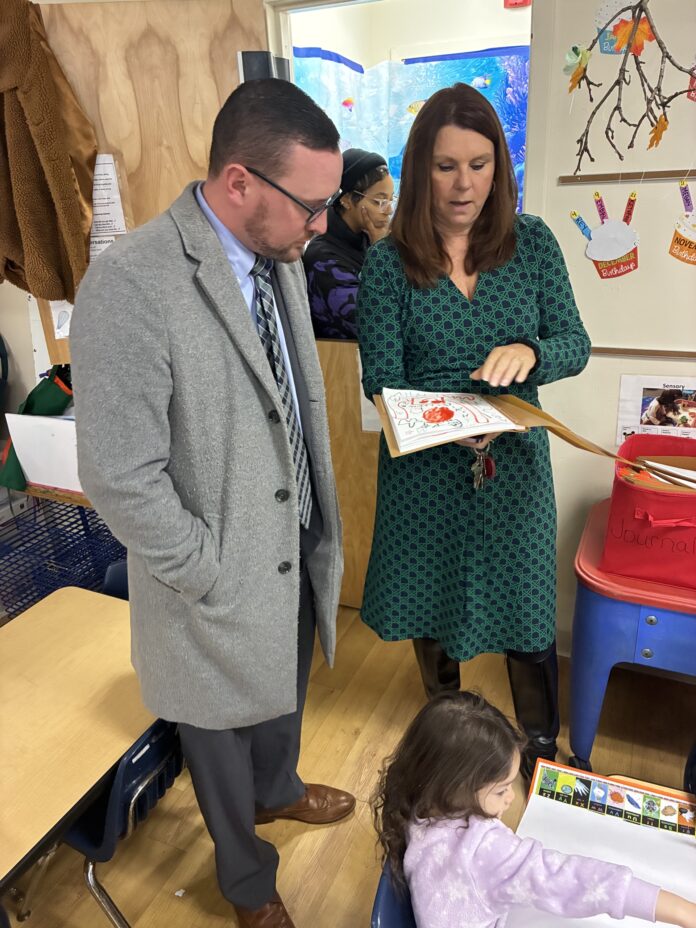
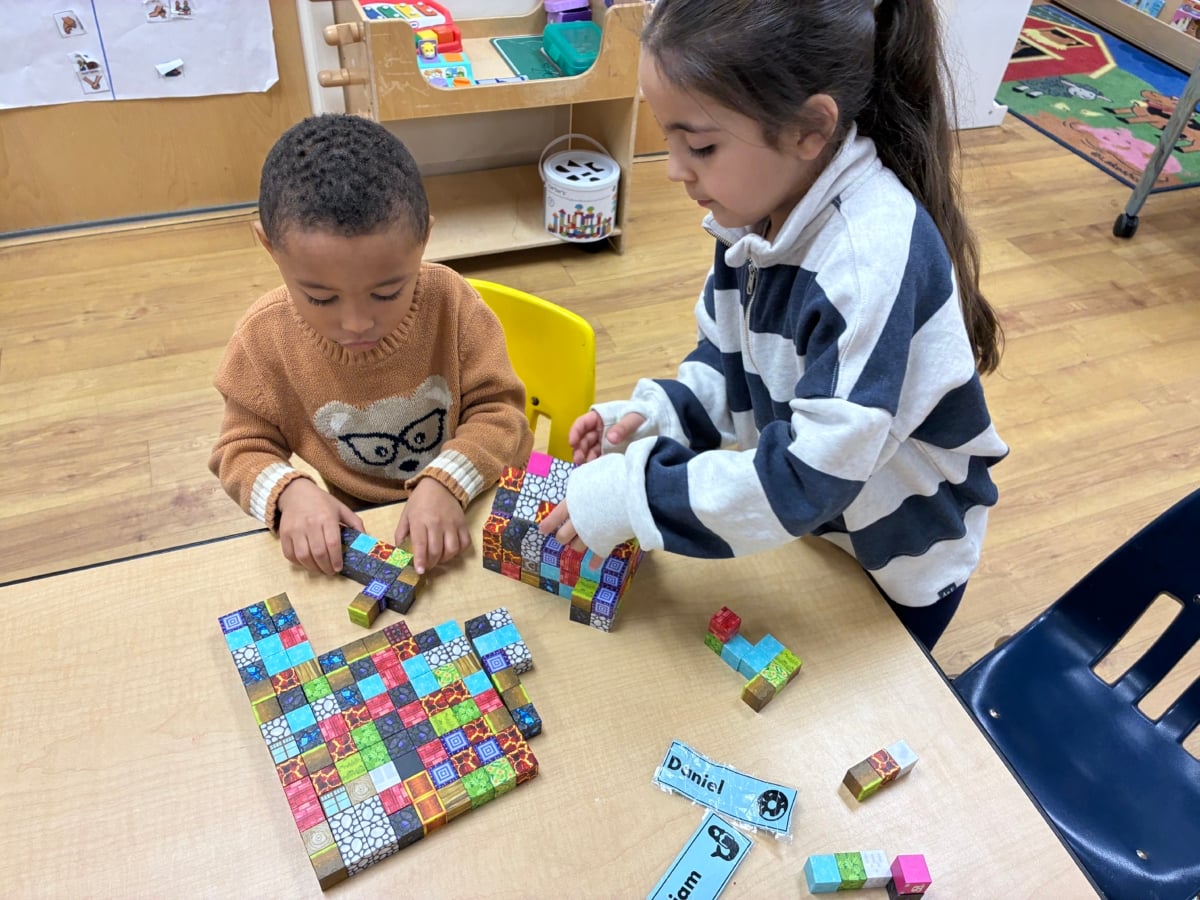
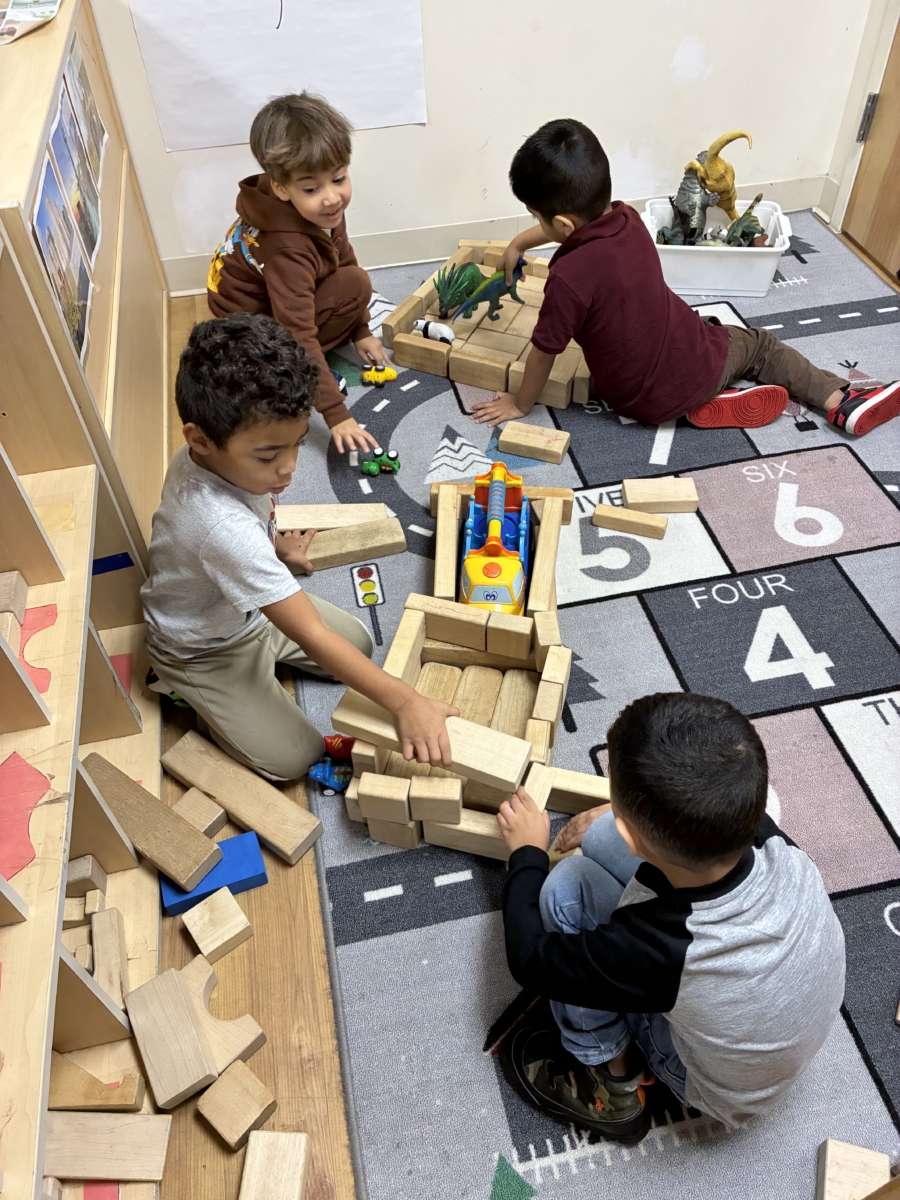
State Rep. Sean Dougherty last week visited the Kinder Academy location at 7332 Elgin Ave. to see the needs of the early learning center.
Dougherty went on a tour with Kinder executive director Leslie Spina and incoming Elgin Avenue center director Lynnette Alvarado. They were joined by Kevin Burgess and Stephanie Blake, of the nonprofit Children First Early Childhood Education, which advocates for children in southeastern Pennsylvania.
Kinder Academy was founded in 1994 and serves about 500 kids in five Northeast locations. In all, there are about 100 staff members.
At the Elgin Avenue site, there are about 20 teachers and 120 children.
Spina and Children First called for a new and recurring Child Care Recruitment and Retention line item, specifically $55 million, in the recent state budget for early childhood educators working for a licensed child care provider participating in the child care subsidy program. That would have equated to a $1,000 bonus for each early childhood educator to help them make student loan, car or housing payments. In the end, the state provided $25 million, which gave each educator $480.
On average, early childhood educators make a little more than $15 an hour, sometimes qualifying for safety net programs or having to work a second job. That wage leads to high turnover and teacher shortages as educators pursue work in better-paying K-12 schools.
In fact, Spina pointed to one teacher who is about to leave Kinder to take a job as a bar manager because the pay is double.
Spina said her teachers deserve greater pay because they have a stellar reputation for preparing children for kindergarten and beyond.
“I have a really, really great staff,” she said. “Every single day, we make a difference.”
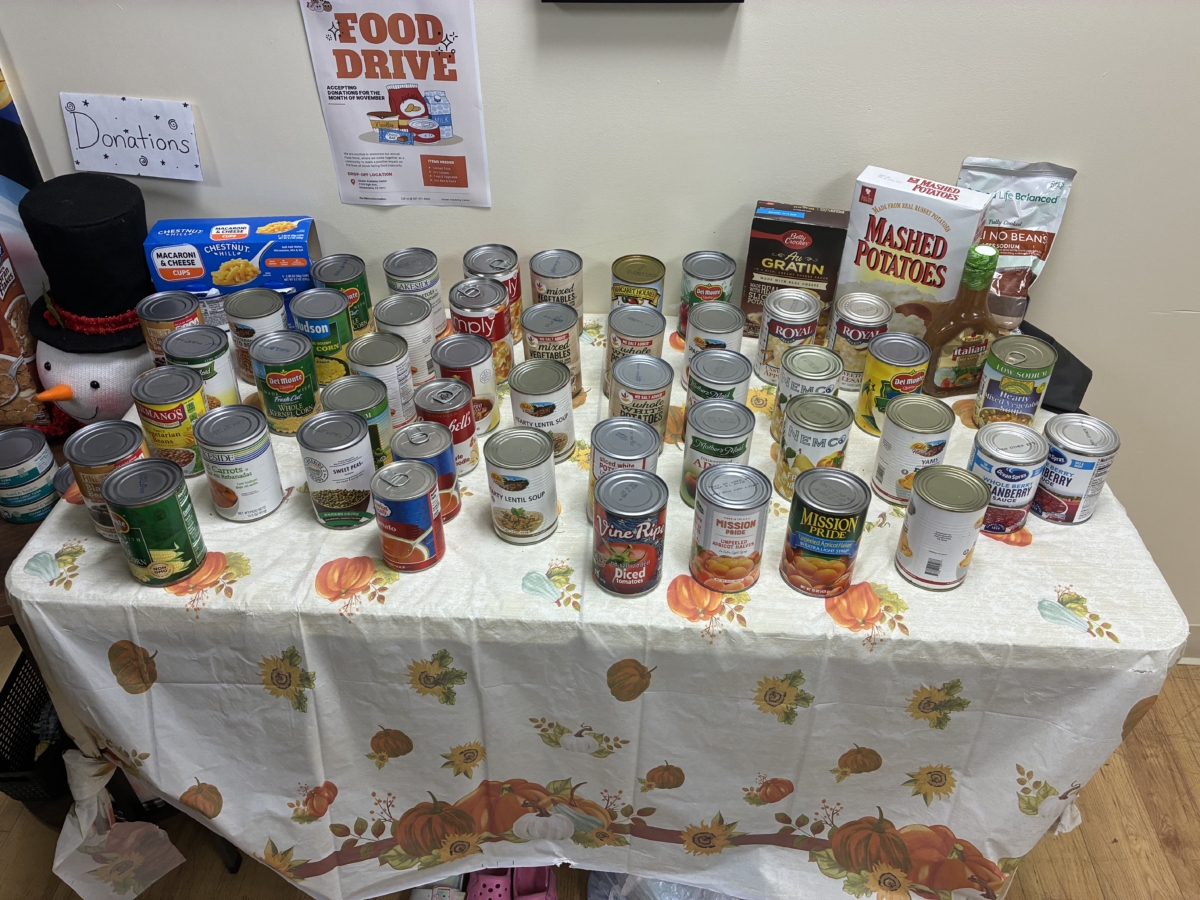
As for families who send their kids to Kinder, the Elgin Avenue center has a table near the front entrance that is open to parents to take what food they need. The Oxford Circle center also serves as a food bank.
Spina, whose Elgin Avenue site is open from 7 a.m. to 6 p.m., said families deal with affordability issues. At one time, she said, about 80 percent of families took part in Kinder’s extended hours program. Today, that figure is under 20 percent. ••