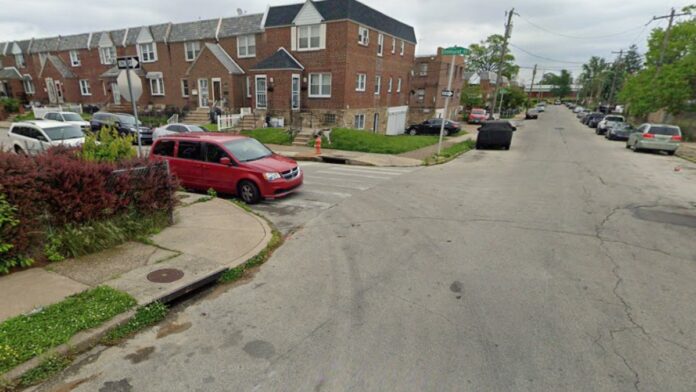
Water service was restored last Tuesday afternoon after a water main break flooded streets and disrupted service in Northeast Philadelphia’s Oxford Circle neighborhood.
The leak was reported at 6:50 a.m. near the intersection of Robbins Street and Elmhurst Street. Video from Chopper 3 showed muddy water rushing along the roadway and sidewalks as the break continued through the morning. Philadelphia Water Department crews arrived a couple of hours after the initial report to investigate and manage the situation.
Water flowed through the area for more than four hours before crews shut it off at around 11 a.m. Once the water was isolated, the department identified a possible broken 8-inch cast-iron water main as the cause of the flooding. Repair work began shortly after the shutdown.
Approximately 40 properties on the 6300 block of Elmhurst Street lost water service as a result of the break. Philadelphia Water Department officials later confirmed that water service to those homes had been restored by 4 p.m. Tuesday. Nearby homes were less affected because they sit on a small hill, which allowed much of the water to flow away from properties and into a couple of nearby storm drains.
During the response, officials urged residents outside the 6300 block of Elmhurst Street who experienced water loss or flooding to contact the Philadelphia Water Department’s 24-hour emergency line. Residents who lost water were also encouraged to check with neighbors before reporting a possible main break. The department explained that if nearby homes still had water, the issue could be related to frozen pipes or damage to customer-owned service lines, which would require a plumber rather than an emergency city response.
Temperatures on Tuesday remained near freezing, conditions the Water Department said can contribute to an increase in water main breaks as well as leaks in customer-owned plumbing. The department recently implemented an expanded winter schedule in anticipation of a higher volume of emergency repairs during cold weather. Residents in the area expressed concern that standing water could freeze overnight and affect the Wednesday morning commute.
Although water service was restored by late afternoon, officials said the response was ongoing. The 6300 block of Elmhurst Street was closed to all traffic while crews inspected the local sewer system for potential impacts from the flooding. If no sewer repairs are required, the Water Department said it will coordinate with the Streets Department or a contractor to restore the roadway.
The Philadelphia Water Department outlined its standard response process for water main breaks, beginning with identifying the type and urgency of a leak and determining whether it originates from a main or a customer water pipe. If a break is causing flooding or damage, crews shut down the main to isolate the emergency and assign a repair crew. When excavation is required, PA One Call is contacted so gas, electric, and other utilities can be marked before digging begins. Repairs or pipe replacements typically take between eight and 12 hours from the start of work, depending on conditions. After repairs are completed, crews flush the line, disinfect the main if needed, and patch the road, with permanent street repairs handled by the Streets Department.
Residents are advised that sediment and debris can enter household plumbing following water main repairs. The department recommends flushing home pipes for 30 minutes using a bathtub, utility sink, or outdoor hose, and cleaning faucet screens to prevent clogs.
Water mains fail when the stresses placed on a pipe exceed its strength. Officials said that pipes weaken over time due to internal and external corrosion, traffic loading, temperature changes, and underground construction, all of which can lead to joint leaks, pipe breaks, or service lines detaching from mains. The Water Department said its last wooden water mains were removed from service in 1858.
To reduce the likelihood of future breaks, the department continues to invest in infrastructure programs, including water main replacement prioritization, corrosion testing and rehabilitation, cathodic protection to prevent exterior corrosion, and leak detection efforts. Acoustic devices are used to analyze approximately one-third of the city’s water mains each year, while larger transmission mains are inspected by specialized contractors.