By Brandon Fey
Northeast Times
The U.S. Navy just wrapped up celebrations of its 250th anniversary throughout 2025, including programming in Philadelphia in the fall. The events commemorated the vote of the Second Continental Congress on Oct. 13, 1775, to create a naval force at the beginning of the Revolutionary War.
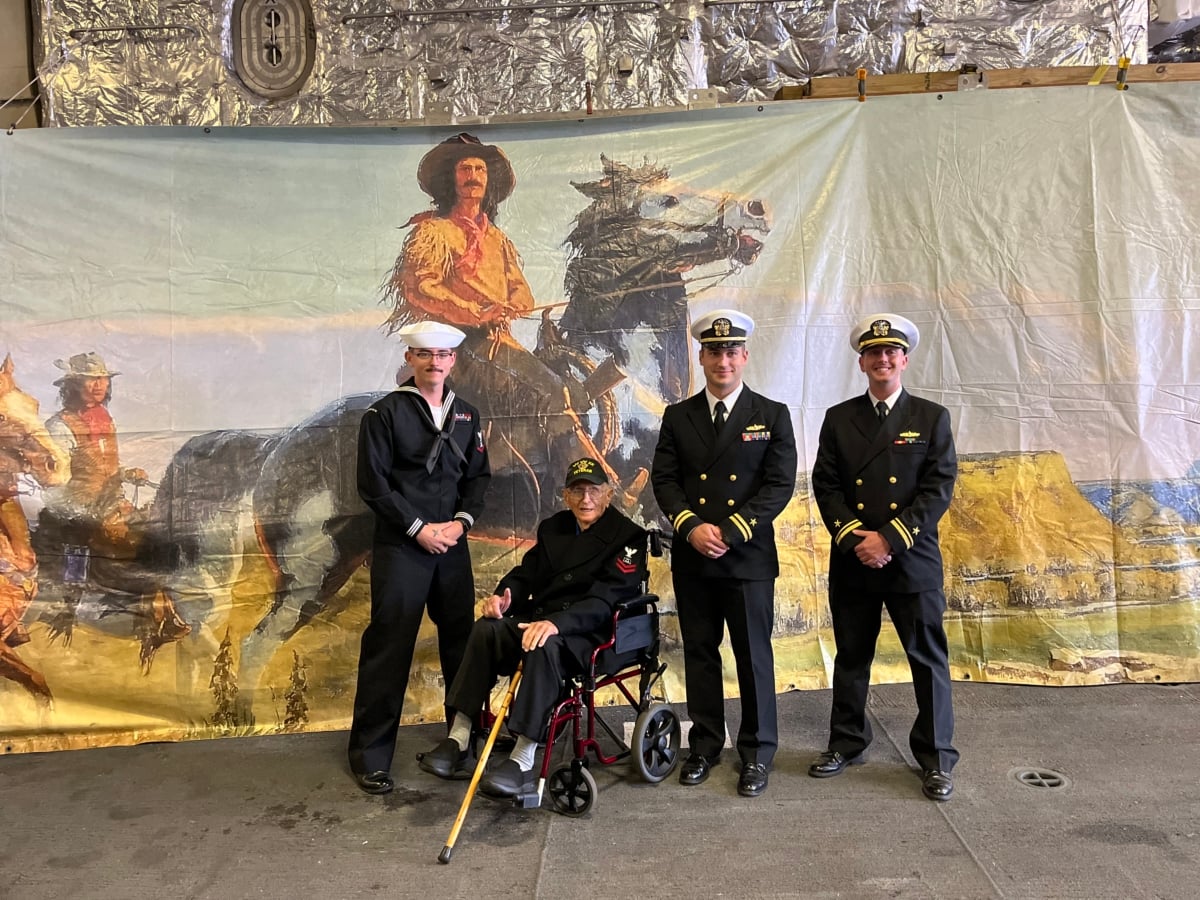
Among the distinguished guests was the then-99-year-old Petty Officer 2nd Class Edward D. Desmond, who is one of the last remaining sailors to have served aboard a Landing Craft Support (LCS) ship from the Second World War.
Desmond grew up in Boston, where he currently resides. In 1944, he joined the Navy at the age of 17 and was sent to the Sampson U.S. Naval Training Station in Romulus, New York, for basic training. He recalled the snow and cold temperatures of 3 degrees above freezing in upstate New York during this time in February.
During the war, Desmond served as the cook aboard his LCS and manned an anti-aircraft gun during battle. The LCS ship was the most pound-for-pound heavily armed vessel of the war. At a length of 158 feet, 6 inches and 250 tons, these ships were designed with a flat keel that enabled them to provide heavy firing support for landing craft by driving directly onto enemy-controlled beaches and then towing themselves back to the sea using a rear anchor.
Some 130 LCS ships served in the Pacific Theater of the war and were often assigned to picket duty to protect other ships from Japanese air attacks.
Desmond’s ship had a pet monkey named Oakey, which the crew had found on a Pacific island. He was particularly fond of Desmond and would hide in his vest during air attacks to protect his ears. One day, another sailor who had been jealous of Desmond’s popularity, took hold of Oakey and found that after a similar attack, the monkey had soiled his uniform. When he asked Desmond about how he had been able to avoid such a fate, Desmond replied that he had used “monkey talk.”
During the war, Desmond participated in several major operations, including the Battle of Okinawa from April to late June 1945, where he provided supporting fire for attacking landing craft.
Desmond remembers that after the battle, his ship was assembled with other vessels near an island off the Japanese mainland. He stated that he had never before seen such a large assembly of ships, landing craft, airplanes, soldiers and supplies. He later learned that he was part of the force that was being amassed for the invasion of the Japanese mainland — an invasion that never took place due to the atomic bombings of Hiroshima and Nagasaki in August.
Desmond was a guest of honor at the Navy’s Gala Birthday Dinner in the Great Hall of the National Constitution Center, where he received a standing ovation as the oldest sailor in attendance.
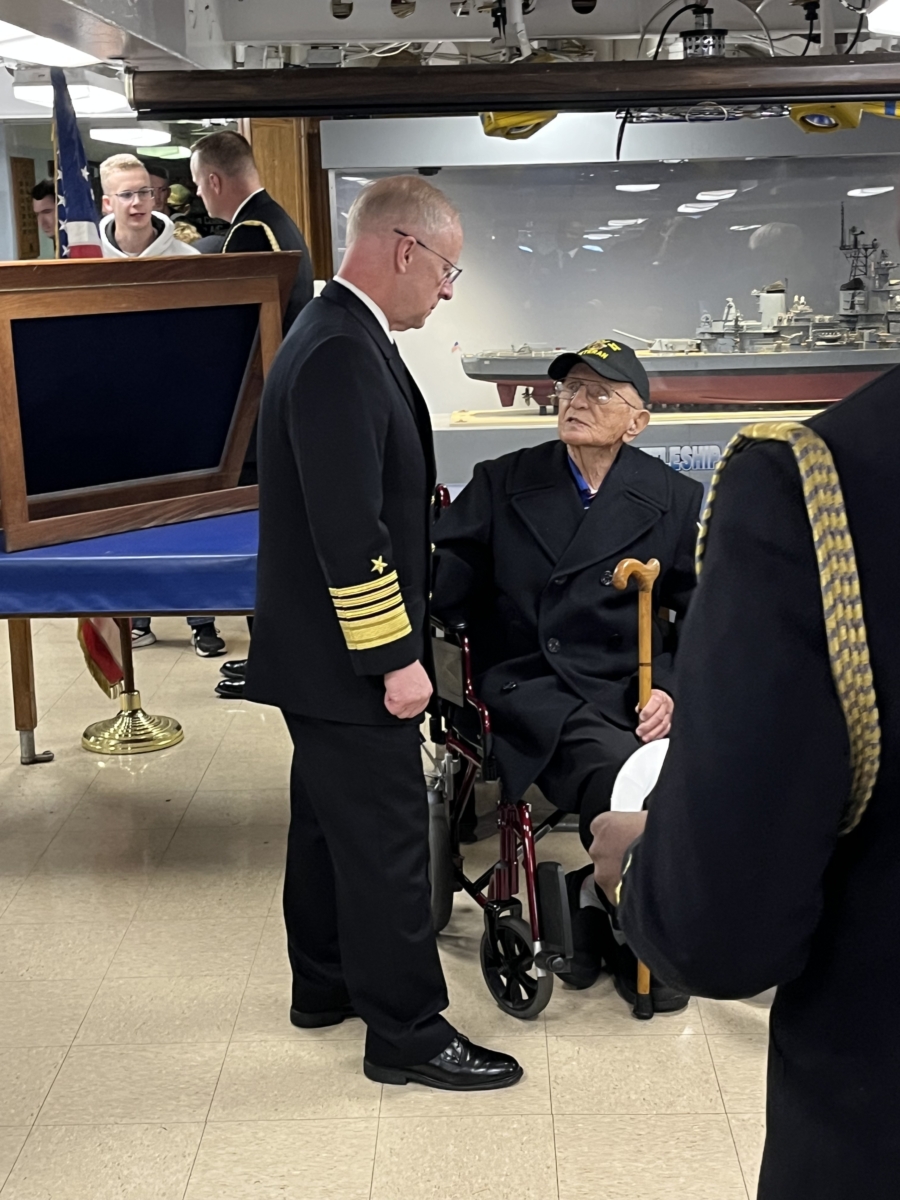
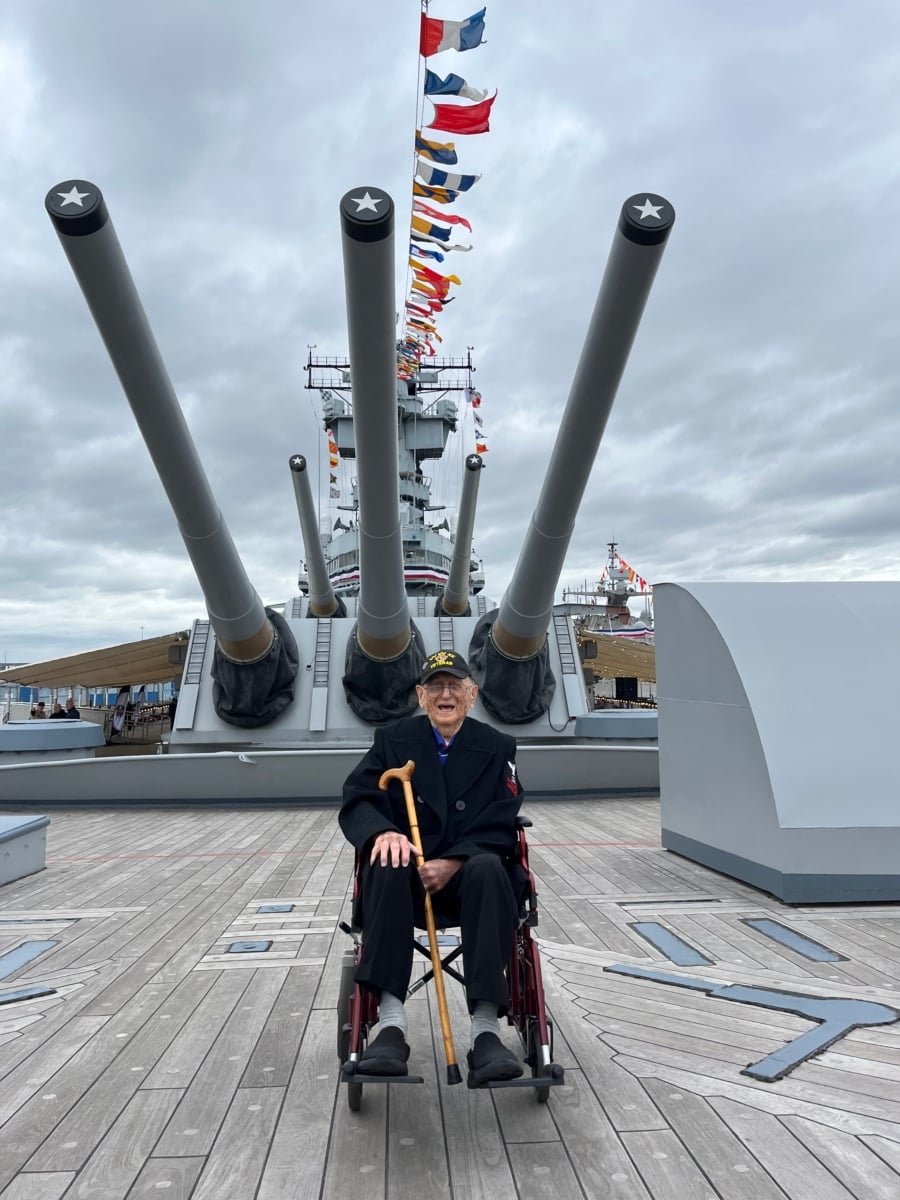
He was also given a private tour of the USS New Jersey battleship moored in Camden, where he met Chief of Naval Operations Daryl Caudle and Paul Robbins, another Second World War veteran who had served on the New Jersey. Desmond was then invited aboard the USS Billings (LCS 15), a modern LCS (now an abbreviation of littoral combat ship) that was rafted beside the New Jersey for a tour.
Later that night, Desmond attended a “Victory at Sea” concert that featured the U.S. Navy Band, the Marine Corps Drum and Bugle Corps and a performance from Patti LaBelle.
Throughout the weekend, Desmond frequently expressed gratitude for his recognition and exhibited an enduring sense of duty and humility about his service.
Desmond and his family celebrated his 100th birthday on Nov. 10, the same date as the anniversary of the U.S. Marine Corps, with the Navy and Marines later in 2026 playing a role in the U.S. celebration of its 250th birthday. ••