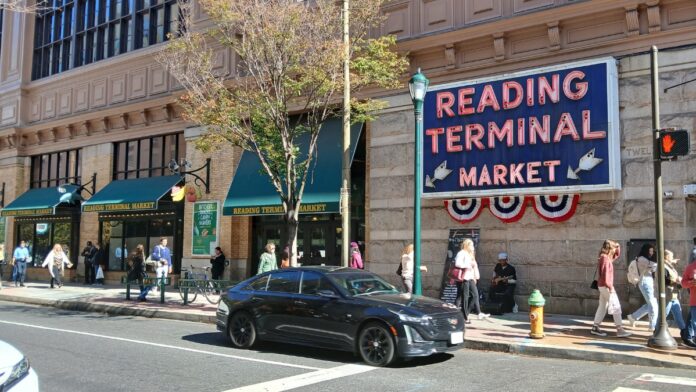
Markets were one of the things I missed most when I was in Asia. I’m very much a foodie, and I like being able to walk around, see different food in one place, and decide what to eat as I go. So, when I first heard about Reading Terminal Market, I had to make the trip, and it was exactly what I had hoped. Tantalizing food smells hung in the air as people moved through the aisles, and I was surrounded by chatter and orders being called out.
After that first visit, I kept coming back. Over time, I started to figure out which places were worth waiting for, when it got too crowded, and the spots I almost always end up at. Here’s what I’ve picked up along the way.
What First-Time Visitors Should Expect
One thing to expect is crowds, especially during peak times. On weekends around lunchtime, the place is jam-packed – I’m talking shoulder-to-shoulder lines at the famous stalls and hardly an open seat in sight. The noise level rises with the crowd buzz, and you might have to say “excuse me” a few times as you navigate. It’s all good-natured, though; the market attracts people who generally share a love of food, and there’s a communal feeling in the air. Still, it can be hectic. Late mornings and midday are the busiest – by about 11:00 a.m., the halls start getting very crowded with long lines, and it might be tough to find a seat.
If you’re someone who dislikes crowds, try to come in the off-peak hours (more on timing later). On my first visit, I came smack at 1 p.m. on a Saturday, and it was a trial by fire: I was jostling through a maze of hungry people. Just know that if you come at a busy time, you may need patience to shuffle through and wait for that famous cookie or sandwich. The market does have quieter times too, which can feel almost peaceful (I’ve had serene weekday mornings there where I could actually hear the oldies music playing softly over the speakers and have a leisurely chat with a vendor.)
Seating inside can also be limited during busy hours. There are communal tables in the center court and counters at certain vendors (like the diner stalls) where you can sit. Often you’ll end up sharing a table with strangers, which can lead to fun little conversations (don’t be surprised if a local offers you a tip on how to eat that messy sandwich!). If no seats are free, I’ve been known to perch at a counter ledge or even take my food outside to the sidewalk benches on Arch Street in nice weather.
Also, while many vendors now accept credit cards, a few of the old-timers or Amish vendors might be cash-only or have a card minimum. I always bring a bit of cash just in case – it can also speed things up when you’re quickly buying a $3 pretzel or a bag of produce. Prices in the market vary by vendor, but generally I find them reasonable for the quality and portion sizes (e.g, you can get a filling sandwich for $10-$12, a generous donut under $2, etc.). Tipping isn’t expected at most counter-service spots, but I’ll sometimes toss a dollar in a tip jar if service is especially friendly.
What to Eat at Reading Terminal Market
With so many choices, it can be hard to decide what to eat at this foodie haven. Over numerous visits, I’ve honed in on a handful of must-eat stops that I can’t get enough of. Here are the Reading Terminal Market vendors and dishes that have earned my everlasting devotion.
DiNic’s Roast Pork
This is my absolute favorite and arguably the most famous sandwich in the market. DiNic’s is an Italian sandwich stand right in the center, and there’s almost always a line, especially around lunch. What everyone’s waiting for is the roast pork sandwich — thin slices of slow-roasted pork on a crusty roll, usually with sharp provolone and broccoli rabe.
The pork is really tender and full of flavor, and everything comes together perfectly. It’s definitely a messy sandwich, so I always grab extra napkins and try not to rush it. The line looks long, but it usually moves faster than you’d expect. If you come a little later in the afternoon, the wait can be much shorter. DiNic’s also has other sandwiches, like brisket and meatballs, but I always end up ordering the roast pork. It’s the one I think about when I’m deciding to go to the market.
Dutch Eating Place
On mornings when I visit, I bee-line to the Dutch Eating Place for a hearty breakfast. This stall is a classic Pennsylvania Dutch diner run by an Amish family, tucked along one end of the market with stools where you sit elbow-to-elbow with other patrons. I often end up chatting with a local regular while waiting for my pancakes, which adds to the charm. The Amish staff are warm and welcoming, calling you “hon” or “love” as they pour your coffee.
If it’s your first time, get the blueberry pancakes. They’re plate-sized, fluffy, and absolutely stuffed with fresh blueberries, with butter melting on top and a side of crisp bacon. They also make a great apple-cinnamon French toast that comes piled high and well-spiced. Beyond breakfast, the lunch food is solid, too — comfort dishes like hot turkey sandwiches with gravy, burgers, and chicken pot pie soup. If you still have room, the warm apple dumpling is worth trying.
The Dutch Eating Place is closed on Sunday and Monday and shuts down by mid-afternoon on the days it’s open, so timing matters. There’s usually a line during the breakfast rush, but going around 9:00 a.m. makes it easier to find a seat.
Hershel’s East Side Deli
When the craving for a classic Jewish deli sandwich hits, I head to Hershel’s. It opened in 2006 but has quickly become a staple, known for what I believe are the best hand-carved pastrami and corned beef sandwiches in Philly. You can usually spot Hershel’s by the line of people and the sight of a guy behind the counter expertly carving steaming hot pastrami briskets by hand.
The meat is sliced thick, piled absurdly high between rye bread, and slathered with mustard – a classic overstuffed deli sandwich. I adore the pastrami (peppery, smoky, melt-in-your-mouth tender), but the corned beef and roasted turkey are also excellent. It’s fun to watch them carve and assemble your sandwich to order; if you sit at the counter, you get dinner and a show. I often grab one of the few counter stools here so I can kibitz with the staff – they’re friendly and used to people ogling the meat carving.
The sandwiches are big enough to share, especially if you add a side like matzo ball soup. But I’m not ashamed to say I’ve polished off a whole pastrami on rye solo after a long morning of walking around the city. It’s that good. There’s usually a steady line during lunch, so I try to come right at opening or after the rush, around 2 p.m. Even if you do wait, just remember that patience pays off – you’ll soon be sinking your teeth into one of the region’s most prized deli sandwiches.
Beiler’s Bakery (Donuts & More)
No trip to Reading Terminal Market feels complete to me without stopping at Beiler’s. It’s an Amish family-run bakery known for its donuts, and they really are that good. You’ll usually find it by following the smell of freshly fried dough and the crowd gathered around the stand. You can watch the bakers hand-roll, fry, fill, and frost the donuts right in front of you.
My go-to is the maple bacon donut, but there are dozens of flavors to choose from, including classic powdered jelly, s’mores, and Oreo crumble. The donuts are pillowy, generously sized, and cost about $2 each. The line can get long, especially on Saturdays, but it moves steadily and is usually worth the wait.
Beiler’s also has a full bakery stall across the aisle with whoopie pies, sticky buns, breads, and pies. The whoopie pies are a Pennsylvania Dutch classic and come in flavors like chocolate, pumpkin, and red velvet. If you’re unsure what to get, the staff are friendly and happy to help. Just keep in mind that Beiler’s is closed on Sundays, so plan your donut cravings accordingly.
(Of course, the market has many more incredible vendors – shoutout to others I love, like Miller’s Twist for soft pretzels and Bassetts for ice cream – but the ones above are the spots I find myself returning to again and again. Part of the fun is discovering your own favorites as you eat your way through this food hall!)
Tips for Enjoying Reading Terminal Market Like a Local
If you want to experience this Philadelphia food market the way I do, these tips will help you settle in and enjoy it like a local rather than rushing through it.
- Go early (or late) to avoid peak crowds: By around 11:00 a.m., the market starts filling up fast with lunch crowds and long lines. When I want space to wander and think, I arrive close to opening at 8:00 a.m. Late afternoon works too, after the lunch rush, the aisles calm down, and it’s easier to grab a seat.
- Plan your parking or transit: Driving in Center City can be a hassle, but nearby garages usually offer parking validation with a small purchase. That said, I often take public transit or walk—Jefferson Station and multiple bus and subway lines are just steps away, and it saves a lot of stress.
- Bring cash (and small bills): Most vendors accept credit cards, but a few prefer cash or have minimums. Having small bills makes quick purchases easier, especially for snacks or baked goods.
- Have a game plan (but stay flexible): It’s smart to have a short list of “must-eats” (DiNic’s, Beiler’s, Hershel’s—whatever your priorities are). But stay open to detours. Maybe you planned for one thing, then the smell of cinnamon or sizzling onions pulls you somewhere else.
- Talk to the vendors: One of the best parts of the market is the people. The folks behind the counters often know the history of their stand, the best item on the menu, and what sells out first.
- Check the events calendar: The market sometimes hosts seasonal events and themed food celebrations. If your visit happens to overlap with one, it can be a bonus—though it may also mean bigger crowds.
- Come hungry, but not starving: I know that sounds contradictory, but it matters. If I show up absolutely ravenous, I make impatient choices and miss the fun of browsing. A light snack beforehand (or planning a quick starter) helps me wander, compare, and commit to what I actually want.
- Mind your belongings: It’s a crowded space, and people brush past each other constantly. I keep my bag zipped and close, and I’m careful not to leave anything unattended at tables. Nothing about the market feels shady to me, but crowds are crowds, and common sense goes a long way.
Final Thoughts: Come Hungry, Take Your Time
After finding some of the best food at Reading Terminal Market, it’s hard not to recommend it to any foodie. And if you’re visiting Philly, a few hours here can tell you more about the city than many museums might. You’ll taste the city’s best, rub shoulders with its people, and be part of a living tradition that’s over a century strong.
I hope my insights will help you navigate and savor it all. Who knows, maybe you’ll fall in love with it as much as I have. And as I often do, you might find yourself already planning your next trip back before you’ve even finished your last bite. Happy eating, and see you at the market!