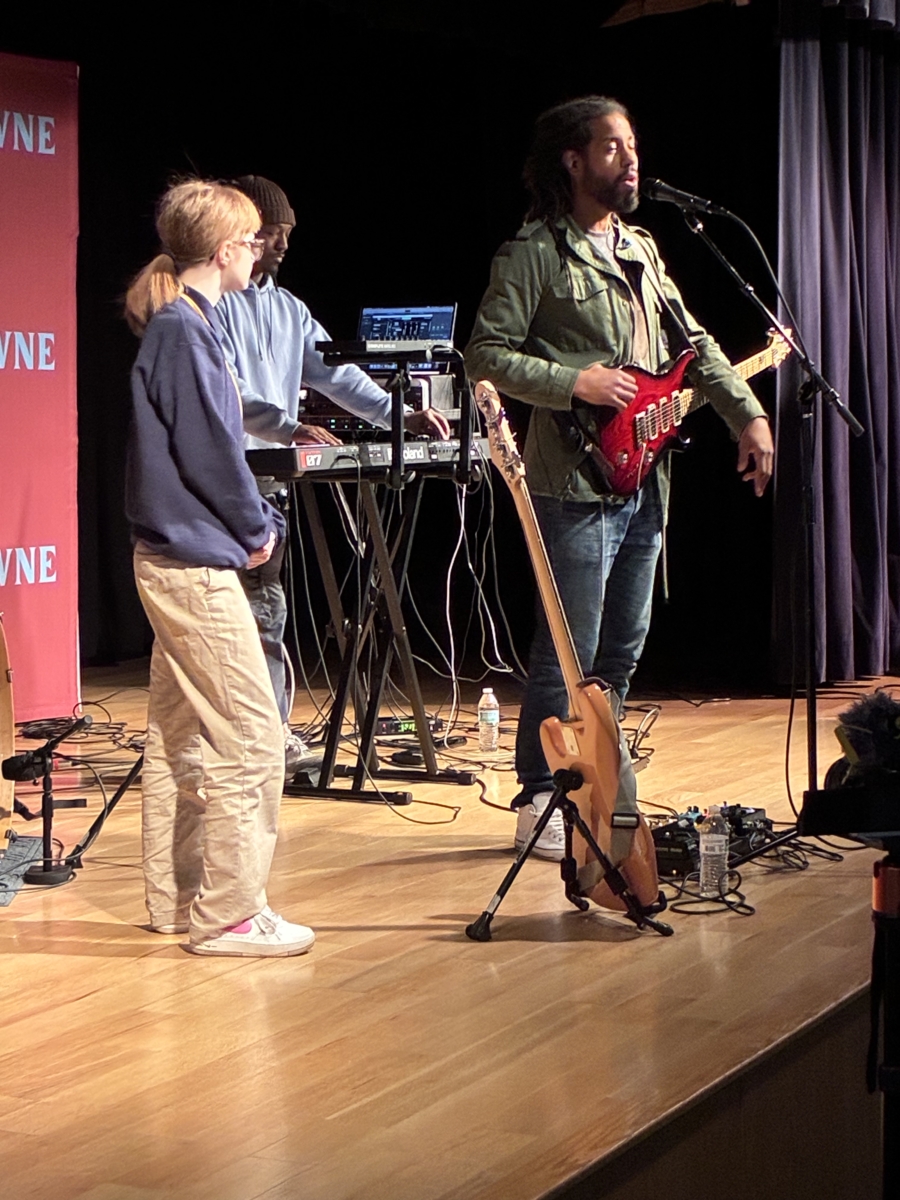
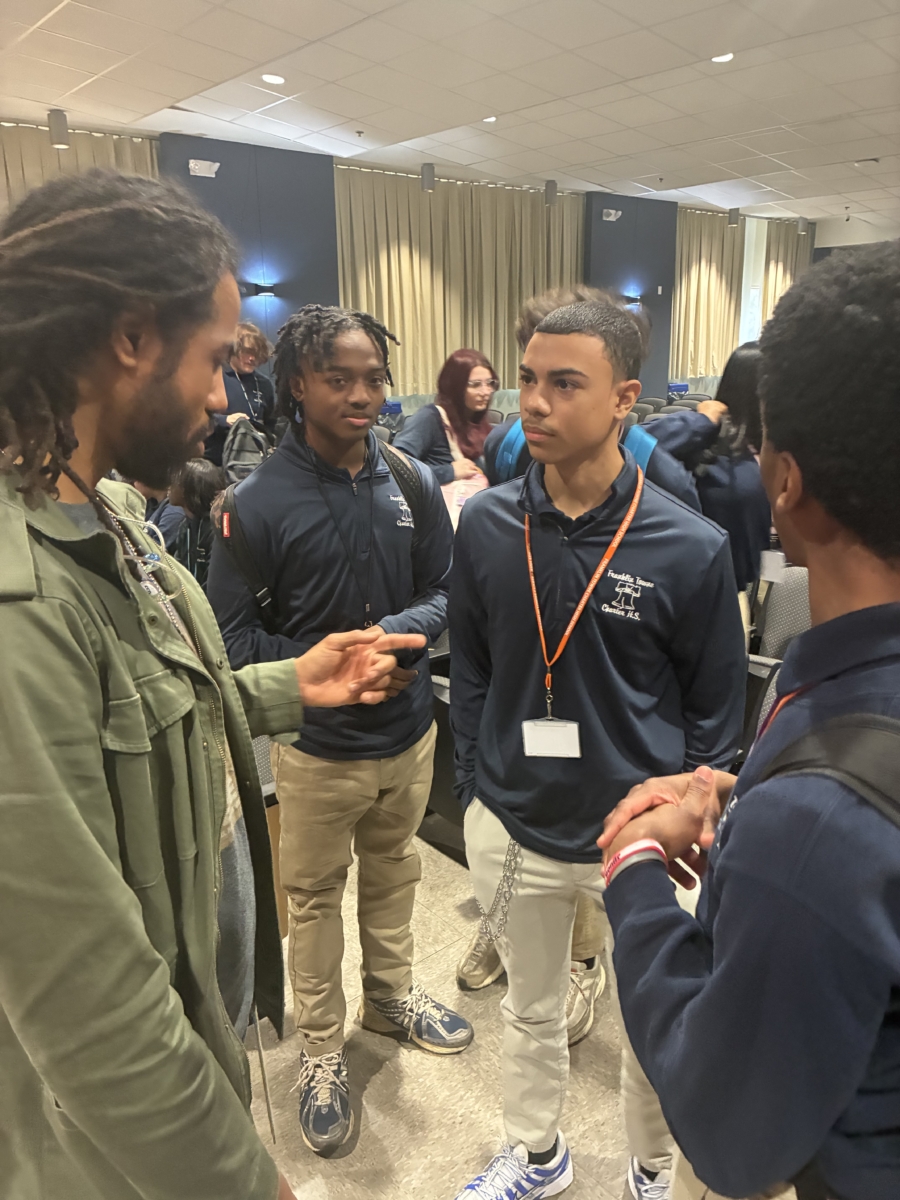
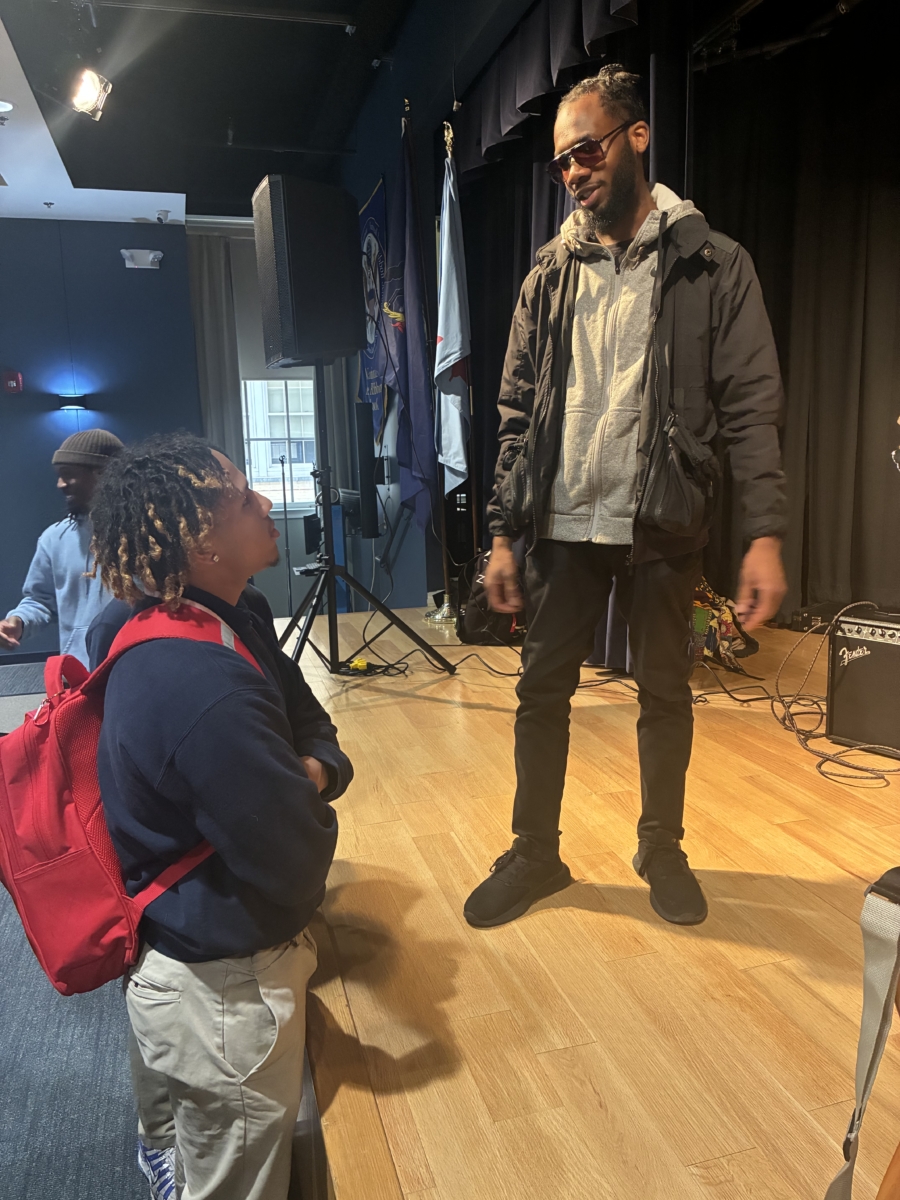
Franklin Towne Charter High School last week observed the 100th anniversary of Black History Month with an interactive musical experience led by Amari Rebel Johnson and the Movement.
Johnson, on vocals, was joined by Caleb Lucky on keys and drummer Malik Henry. They delivered a presentation that focused on the history of black music, from the days of slavery to freedom, The Great Migration and the Civil Rights Movement.
“The story is still being written,” Johnson said.
Musical forms included the blues, rap, rock ‘n’ roll, hip hop and jazz.
Songs performed included Johnny B. Goode, Say It Loud – I’m Black and I’m Proud, Summertime and A Change is Gonna Come.
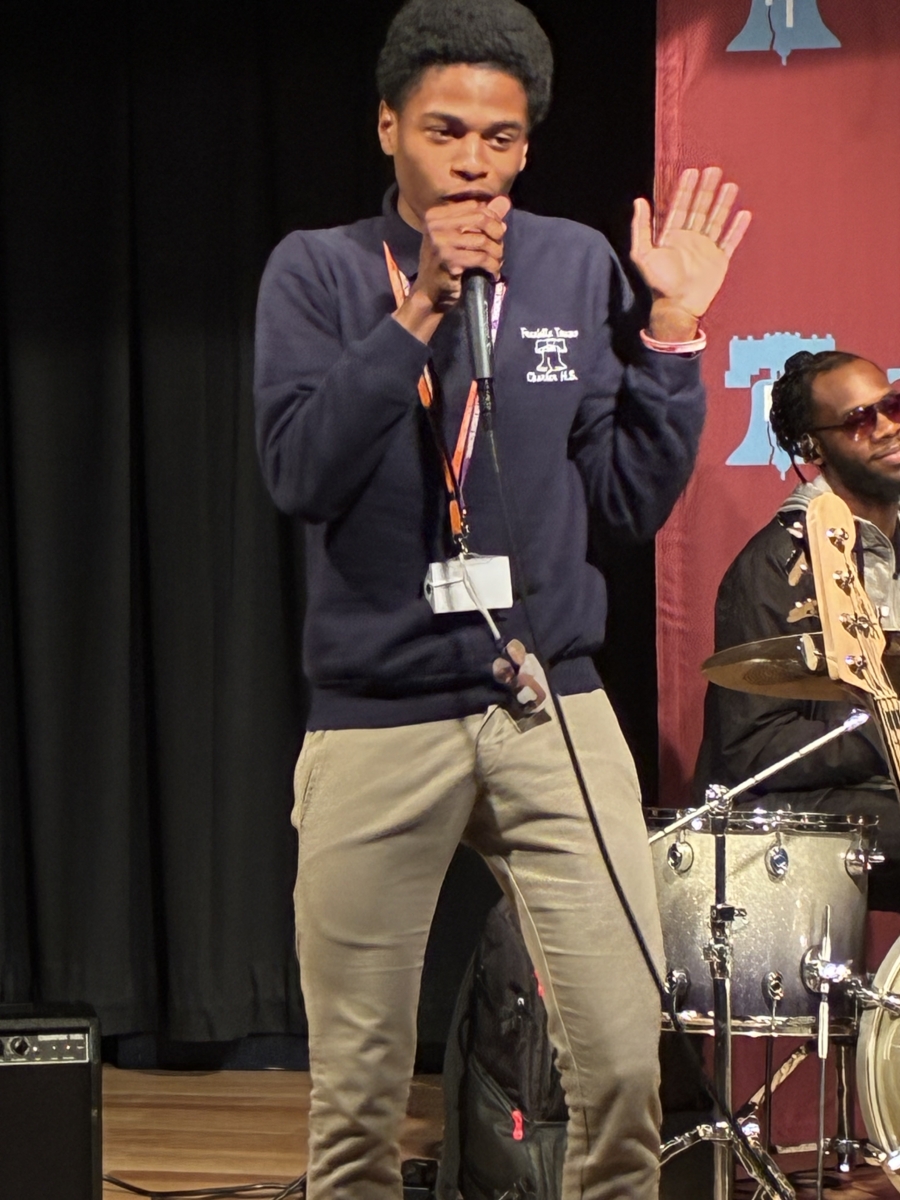
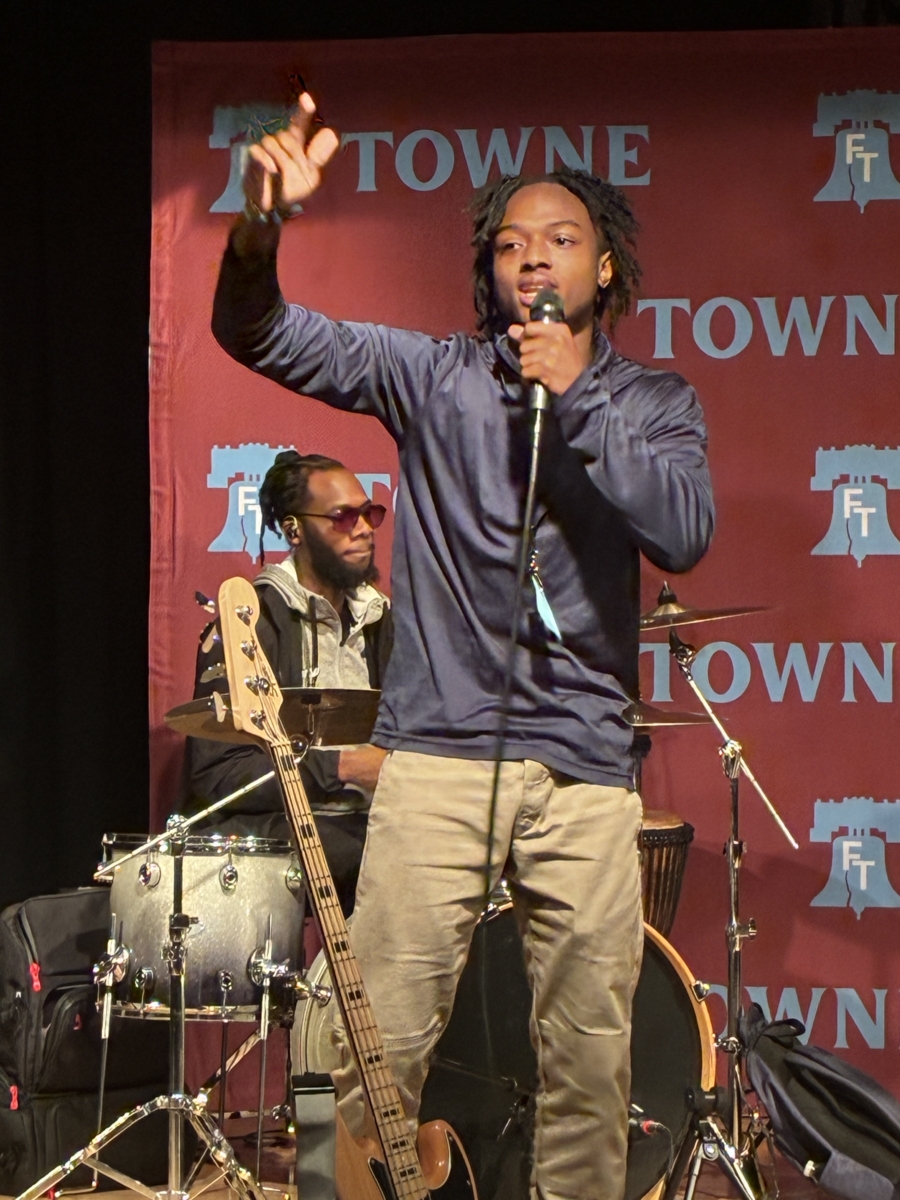
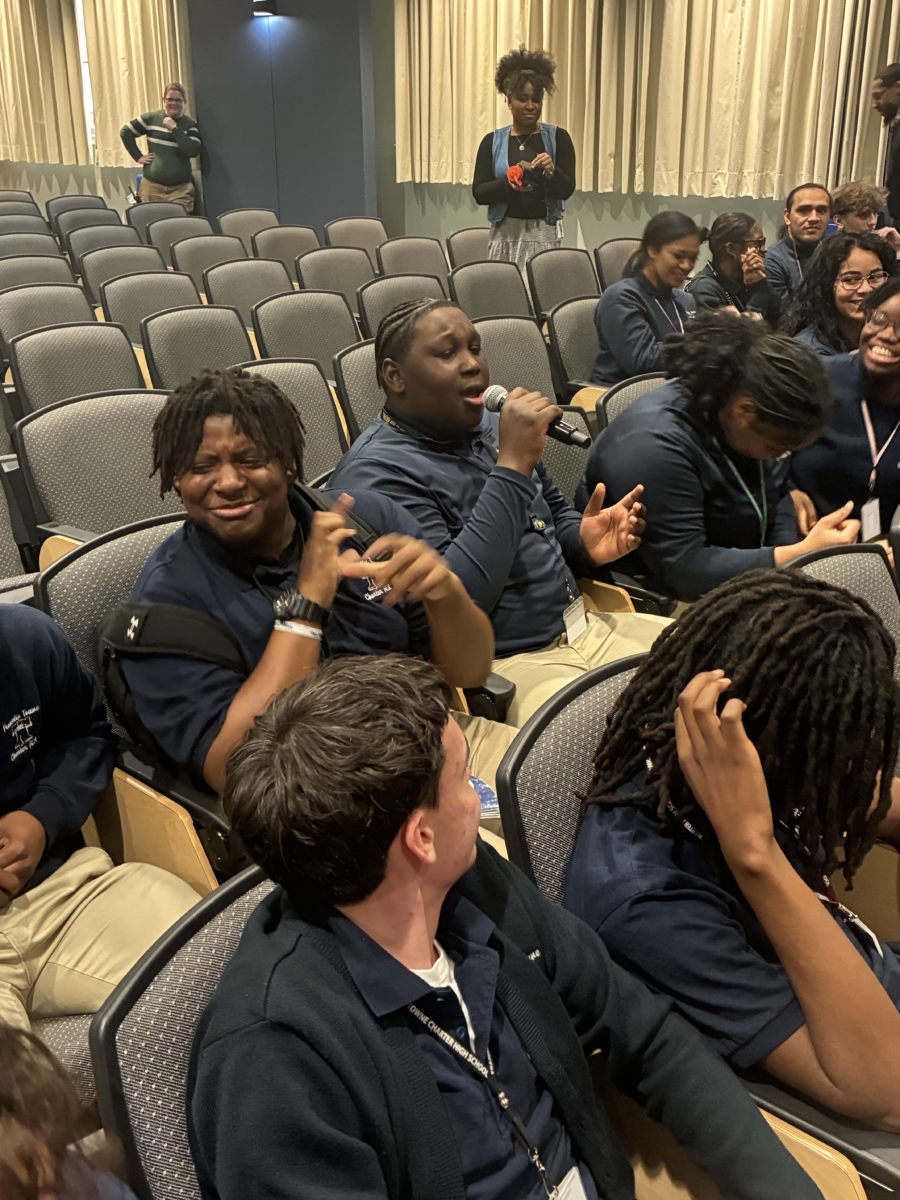
Students clapped along and really started to get into the show when Johnson invited some in the FTC community to join him on stage.
After students began a chant of, “Mr. Judge,” music and band director Jameel Judge performed an intro to Rapper’s Delight.
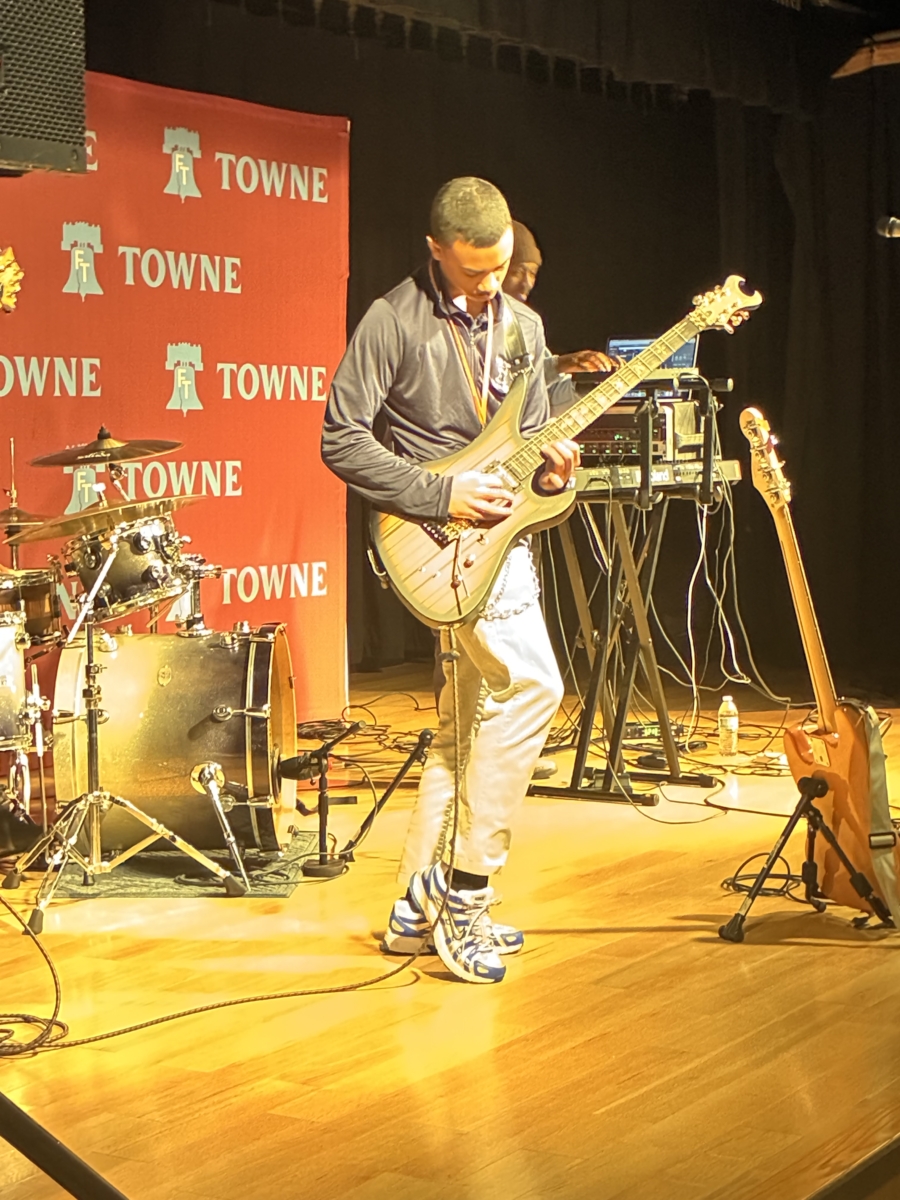
Some students also had a chance to perform. Tabitha Jackson timed the beat with the band, while Zeiden Ramos did a solo on the guitar. Qurazz Overton and Kevin Daughtry offered freestyle raps, while Joshua Thevenin sang Take Me to the King, originally performed by Tamela Mann.
Franklin Towne High School CEO Brianna O’Donnell saw how students enjoyed the performance and said she’ll welcome Johnson back.
“Public charter schools are meant to be innovative and unique, and so this event was not planned to be a typical assembly. With Dr. Amari Rebel Johnson, students actively engage with history, connect it to Philadelphia’s story and see how their own voices connect to a larger context of black culture and expression,” she said. ••